 Print This Post
In this episode, Professor Louise Serpell is joined by 2026 Rainwater Prize winners Professor Dennis Dickson, Professor Melissa Murray and Professor Marc Busche. They talk about their work and the science that led to them earning this much deserved award, reflecting on decades of research into tau and its role in neurodegenerative disease. The conversation explores how tau functions in the healthy brain, how it becomes harmful in conditions such as Alzheimer’s disease and progressive supranuclear palsy, and why certain brain regions are especially vulnerable.
The discussion covers different forms of tau, including soluble species that may disrupt how neurons fire before visible tangles appear. Brain banking, imaging and fluid biomarkers are highlighted as key tools for understanding disease differences and improving diagnosis. The importance of rare MAPT mutations and what they can teach us about future treatments is also explored.
Alongside the science, there are thoughtful reflections on mentorship, risk taking and the value of asking ambitious questions in dementia research.
Key Takeaways:
- Tau is essential but context dependent. It is vital for normal brain function, yet changes in its chemistry, structure or location can drive neurodegeneration.
- Tangles are not the whole story. Soluble tau species can disrupt neuronal firing, even in single cells, before visible aggregates appear.
- Selective vulnerability defines tauopathies. Disorders such as PSP consistently affect specific brain regions and cell types, including glia, and we still do not fully understand why.
- One biomarker does not fit all. Tau PET and fluid markers behave differently across Alzheimer’s disease and primary tauopathies, reflecting structural differences in tau.
- Progress depends on bold science. High risk experiments, strong mentorship and access to the right tools are essential for moving the field forward.
Voice Over:
The Dementia Researcher Podcast, talking careers, research, conference highlights, and so much more.
Professor Louise Serpell:
Hello, and welcome to the Dementia Researcher Podcast. Today, we're exploring the science behind the 2026 Rainwater Prize, and the researchers whose work is shaping our understanding of tau-related neurodegenerative disease. Hello. I'm Professor Louise Serpell from the University of Sussex, and I'm delighted to be hosting today's episode. The Rainwater Prize recognises major advances in tauopathy research. In this podcast, we'll be discussing the scientific questions and the impact of the work, and what this means for the future of the field.
So, without further ado, I'd like to introduce the three 2026 Rainwater Prize winners. Professor Dennis Dickson and Professor Melissa Murray have been recognised for outstanding innovation in neurodegenerative research, and Professor Marc Busche has been recognised as an innovative early career scientist. Thank you all for joining us and congratulations.
To start us off, could I ask each of one of you to briefly introduce yourselves and describe your main research focus and where you were when you found out you'd won?
Dennis, would you like to go first?
Professor Dennis W. Dickson:
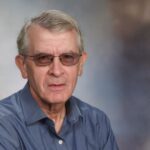
Okay. I'm a neuropathologist and I'm the director of the Brain Bank for Neurodegenerative Disorders at Mayo Clinic in Jacksonville. And this brain bank is the largest brain bank for neurodegenerative disorders in the world, especially when it comes to atypical tauopathies such as progressive supranuclear palsy. I have an MD from the University of Iowa, and I'm actually boarded in anatomic pathology and neuropathology.
Professor Louise Serpell:
Thank you very much. And where were you when you first found out that you'd got the prize?
Professor Dennis W. Dickson:
I was on a Zoom call with the Rainwater Foundation-
Professor Louise Serpell:
Perfect.
Professor Dennis W. Dickson:
For a tau consortium meeting, and then Jeremy popped in and gave us the great news.
Professor Louise Serpell:
Surprise.
Professor Dennis W. Dickson:
surprise. . surprise.
Professor Louise Serpell:
Exciting. Yeah. Melissa, would you like to go next?
Professor Melissa E. Murray:
I'd love to. Hi, I'm Melissa Murray. I'm a professor of neuroscience at Mayo Clinic in Florida. I received my PhD from Mayo Clinic, which allowed me to do much more translational science. So, I'm a translational neuropathologist, and I have devoted the last 15 to 20 years to studying tau in many different forms. And I happened to very kindly be on a call with Dr. Dennis Dickson with the Rainwater Team, and we were meant to be talking about brain banking and upcoming tau consortium meeting. And they just completely surprised us like a surprise party. It was the most wonderfully endearing, I don't know, moment ever. And so, as Jeremy gets on the call, he went to interrupt just, we thought, to say hi. And then he began with, "On behalf of the Board of Governors. We are delighted to share with you that the Rainwater Charitable Foundation and family..." We were speechless.
It caught us quite such a surprise. Yeah.
Professor Louise Serpell:
Sounds amazing. Thank you. And Marc.
Professor Marc Aurel Busche:
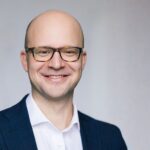
Yeah. Thank you, Louise, for having me. My name is Marc Busche. I'm a clinical academic, split my time between the clinic and the lab. I care for patients with tauopathies and other neurodegenerative diseases and run a research effort that is focused on better understanding how these diseases affect the brain at the level of single synapses, cells, and circuits, and how that leads to symptoms that we see at the bedside. And we hope that through this understanding, we can develop more mechanism-based treatments. And a lot of the work that has been recognised by the prize was done with my team at the UK Dementia Research Institute at University College London. But I've also recently moved to Basel, Switzerland to lead the memory clinic and the old age psychiatry there at the University of Basel.
I found out about the prize in a similar, slightly unexpected way. The Rainwater team scheduled a Zoom call with me to talk about a technique we're using. And then towards the end of the call, they told me, which was a genuine surprise and really lovely news.
Professor Louise Serpell:
Fantastic. It sounds like they had a little bit of a plan associated with-
Professor Melissa E. Murray:
Yeah. [inaudible 00:04:31] had a little bit of fun.
Professor Louise Serpell:
So nice. Yeah. So real personal touch, isn't it? That's brilliant.
So, before we explore individual projects, I want to set the scientific scene. The Rainwater Prize focuses specifically on tau-related neurodegeneration, and I'd like to start by asking all of you why you believe that tau is such a central and challenging protein in this field. So, I might start with Melissa this time.
Professor Melissa E. Murray:
So, tau is an incredible protein. It's a protein that we require for normal functioning. It's what allows our electrical impulses to transmit throughout the brain for really fast communication, faster than a computer. And so, you have this protein that's critical, and yet in many diseases, it starts to change. And we like to think of it as this protein that helps to keep the railroad track stabilised where tau is that nail. And as tau changes, whether through altered structures on a protein level or earlier than that a mutation carriers, the brain isn't able to cope. And so, for us, or for me, the focus on tau pathology is kind of the why and the where. I really enjoy trying to understand why tau changes in particular areas of the brain and why that matters very much for primary tauopathies and Alzheimer's disease sufferers.
Professor Louise Serpell:
That's so interesting. And to think about tau as a functional protein as well as a pathological one, and I might follow up with that a little bit more in a moment. So, in regard to your work, Marc, what do you think is most interesting about tauopathy research?
Professor Marc Aurel Busche:
Yeah, I agree with Melissa. I think the key point is that tau is a normal neuronal protein that the brain needs throughout life. We actually have evidence that suggests that tau is essential for the normal pattern of brain activity. If tau is gone, this pattern becomes disrupted. And in tauopathies, the problem is not that tau is existent, but the problem is that tau changes. It comes chemically modified, it moves into the wrong compartments, it begins to self-assemble into toxic species, eventually filaments. And once that happened, how can disrupt a neuronal function. And it also seems to spread through networks. So clinically, tau is interesting because it maps very closely onto symptoms and progression across multiple disorders. So, it is a central therapeutic target, but it is difficult because you want to block the harmful forms without interfering with tau's normal function.
Professor Louise Serpell:
Absolutely. Yes. So, I mean, coming back to function just briefly, I think it's really interesting to think what tau is doing. Many of the other amyloidogenic or misfolding proteins, we don't know what they do, but we do know for tau, don't we? So, Melissa, you mentioned the railroad tracks, the microtubules that are in the cells and the cytoskeletal association. So why do you think there is this toxic effect? Do you think it's a loss of function or maybe a gain of function or both?
Professor Melissa E. Murray:
So, I think there might be a few different things that might be occurring. Some of the mutation carriers, so there is a gene called microtubule-associated protein tau. It's MAPT, MAPT. It's the gene that encodes from the tau protein that we're all discussing. And mutation carriers where there's different parts of tau that is affected have various differences. Dennis Dickson, Dr. Dickson's going to speak in a little bit about different forms of tauopathies, and it's striking to think where the position on tau is affected, all of these different patterns of pathology. But I like to think about tau as a signalling molecule. And so I think we're getting the clues of where the signals are in different parts of the brain, that we don't want to stop some of the signals, but I think what might be happening is it's hijacking some form that evolutionarily has protected us, but somehow in this disease state, it might be starting something that's helpful and then the brain can't compensate.
Professor Louise Serpell:
Well, that's fascinating. And what about you, Marc? What do you think is happening with tau and its function and dysfunction?
Professor Marc Aurel Busche:
Yeah, so I think it's entirely possible that some of the changes we see are due to a loss of function, but at the same time, we also know that tau, which is abundant in the axon, so in the long processes that connect the cell body with the synapses, is redistributed into other compartments, for example, into the SOMA, and then it can have an impact on neuronal function, on also synaptic function in the dendrites. And I guess this is something we also speak about at a later time point. So, I think it could be a bit of both.
Professor Louise Serpell:
Yes, thank you. So, Dennis, back to the original question, what do you think is so special about the tauopathies? Why have you devoted your academic career to understanding these diseases?
Professor Dennis W. Dickson:
Well, in part, I would want to echo what has already been said about tau in terms of its function, and it takes on abnormal forms, but that's kind of begging the question because we know that there are these abnormal forms. We can see them in the tissue, but what causes that? And I don't think we have a grasp of the major driving mechanisms for the abnormal forms of tau. Clearly tau doesn't go abnormal or rogue, if you will, until mid to late life. The majority of people with tauopathies are in their 60s, 70s, or even older. So, it's something that occurs with the time as a factor that contributes to these degenerative properties of tau protein. And I think if we could understand what those driving forces are, then we could get at the root causes of the tauopathies.
Professor Louise Serpell:
Yes. And so, I'm really interested in whether there are clues from the traumatic brain injuries, because that, I guess, gives us a little bit of a sort of prompt us to something that causes tau to start misbehaving.
Professor Dennis W. Dickson:
It's interesting that you should say that because Dr. Anne McKinney was an invited speaker just like half an hour ago in our neurology grand rounds, and she clearly makes a very strong case that repetitive head injury over a period of time leads to aggregation of tau protein, not only within neurons, but also in glia. We don't actually think of tau as being necessarily a glial protein. So why would a protein that isn't even abundant in glia aggregate within glia?
Professor Louise Serpell:
Yeah, fascinating.
Professor Melissa E. Murray:
May I just add something briefly? One of the things Dennis said that I think is particularly relevant that I think is still our current mystery is the timing. And what we witness with tau is almost a paradoxical ageing effect where we do see certain proteins increase with age. And if we think of them as age associated, yet the individuals who experience the devastation of tauopathies, the younger they are, they often have much greater pathology. Whether we think about that in our primary tauopathy patients in comparison to late onset Alzheimer's disease or even younger forms of tauopathies, that there seems to be a much more aggressive course. So, there could be something acting on it in younger life that enables it or isn't catching as opposed to some protective methods in later life. And Dr. McKinney was just here, and one of the things she said that was really quite striking from the traumatic brain injury area is that they're seeing neuronal loss before some of the tau, such that tau is an important feature, at least in that context, but there may be something that's killing our neurons that we could understand even prior to that.
Maybe tau in this instance and that experimental condition could be responding to the trauma. So, it's fascinating to think on a disease level.
Professor Louise Serpell:
Absolutely. I mean, that makes me wonder about the sort of species of tau that's being involved. So, when you are looking at the pathology, is it that you see a lot of filaments, or can you detect smaller species of tau in the brain tissue?
Professor Melissa E. Murray:
So, our brain bank, as well as I think many other people in the field were really fortunate that Dr. Peter Davies was such a giving person. And so, he would actually create tau antibodies that were derived from brain homogenous. So, he would actually identify tau antibodies relevant to humans. And so, we can see different proteoforms. So, if we think about that nail again, if the nail gets really rusty, we can see little changes on tau. We can see truncated forms and confirmationally, but are we thinking filaments like cryoEM filaments?
Professor Louise Serpell:
Yeah. I mean, in the past, we've done some electromicroscopy looking at sections of human brain from Alzheimer's patients. And we could actually see that the filaments themselves look like paired helical filaments. So, we've got enough resolution to be able to see those, but I'm guessing that you see a large aggregate of protein structure, but you don't necessarily know what sort of structure that is at the level that you're looking at. Is that right?
Professor Melissa E. Murray:
Yeah. I mean, fortunately, Dennis has recruited several EM specialists, electron microscopy specialists that do give us that little window. But yeah, when we're looking down at the microscope, even under at a hundred magnification, you can see filamentous structures, but not that beautiful paired helical that you would see on the black and white images.
Professor Louise Serpell:
Yeah. Not enough resolution. Yeah, absolutely. And I might turn to Marc at this point because I know, Marc, that you are very interested in the species of tau that are important in the observations that you've made. So, did you want to say something about that, about what form of tau might be important?
Professor Marc Aurel Busche:
I guess there are multiple forms of tau that might be important. What we have found is that it's not only the tangle that can impair the function of a neuron, but it's also these soluble species, oligomeric tau, which are probably not as well described and understood, but seem to have an effect on neurons and very specific effects on neurons as well.
Professor Louise Serpell:
Yeah, that's fascinating. I think we've also note that's been reported in other neurodegenerative diseases where the oligomeric species seem to be really important in terms of the disease. So, I think we might advance a little bit onto the next part of the questions. So, I really wanted to talk to you a bit more about the science of the award. And Dennis and Melissa, what is it specifically that you have benefited from the brain banking advances that you've made?
Professor Dennis W. Dickson:
Yeah. So, I think every brain has a story to tell basically. And even though disorders are defined or described based on certain characteristic properties, in terms of distribution of pathology and the morphology of the lesions, be they neuronal or glial, each case is different from every other case in terms of the absolute amount of pathology and the distribution. But if that was taken to an extreme, it would just be a chaotic situation. But after looking at hundreds and even thousands of brains of PSP, we actually see very reproducible patterns of pathology and we see selective vulnerability, certain brain regions such as the subthalamic nucleus, the basal ganglia, the substantia nigra, the cerebellar dentate nucleus. These areas are vulnerable and these are areas that are not vulnerable in many other neurodegenerative disorders. So, disorders that are associated with, for example, TDP-43 pathology, we usually don't see much pathology in the cerebellar dentate nucleus.
We don't necessarily see pathology in the globus pallidus, for example. So, the concept of selective vulnerability is crucial to understanding diseases and how they present clinically and pathologically. What we don't understand, and maybe this is where molecular high profiling, deep phenotyping will eventually give us answers, we'll explain why is the cerebellar dentate nucleus more vulnerable? Why is the globus pallidus more vulnerable? And so, I think as a pathologist, I can describe it. I can correlate my findings with the clinicians, but I can't get to the fundamental processes that lead to those changes. And that's where I need people like Marc and Melissa to come to the rescue.
Professor Louise Serpell:
At this point, I just wanted to ask you a bit more about PSP. So, it's progressive supranuclear palsy. And just you'd mentioned that the symptoms sort of correlate with the region that's affected. So, I wondered if you wanted to say a bit more about that.
Professor Dennis W. Dickson:
So, there's variation in the distribution and density of the pathology, but certain areas are affected in virtually every case of PSP, the substantia nigra, globus pallidus, the dentate nucleus and the cerebellum and a certain brainstem nuclei. We don't know what makes those regions vulnerable, but they all are regions where we get accumulation of four-repeat tau within neurons. And I'd be remiss to say in contrast to a disorder like Alzheimer's disease where the overwhelming majority is purely neuronal. This disorder is a neuronal and glial tauopathy. And so, I think we have to think a little bit outside of the box in using the AD paradigm to try to understand PSP because AD is missing for the most part, except for ageing related astroglial pathology. It's missing that glial component. So, the PSP and corticobasal degeneration, other four epitheliopathies are a really unique set of disorders that challenge us to understand how both neurons and glia can contribute to the disease process.
Professor Louise Serpell:
Yeah. Okay. So that's really interesting. So, in terms of the symptoms of PSP, do you understand more about how the symptoms are associated with those particular areas of the brain?
Professor Dennis W. Dickson:
I think so. So, for example, there are nuclei in the midbrain that control vertical gaze eye movements and vertical gaze, and those areas are selectively damaged in PSP. The areas in the midbrain and substantial nigra are involved in the Parkinsonian features. Involvement of the basal ganglia can lead to more complex motor dysfunction as well.
So, there's pretty good correlation between the anatomy and the clinical presentation. So, for example, most patients with PSP don't have cognitive problems. If they do, it's more of a mental slowing, but they don't have cortical abnormalities. But a subset of PSP patients has widespread diffuse pathology, and it affects the cortex. Those are individuals that present with corticobasal syndrome or frontal lobe dementia or other types of complex neurobehavioral syndromes, which we don't see in most patients with PSP, but it's these atypical PSP patients that have the more widespread involvement of higher order cortical areas.
Professor Louise Serpell:
Okay. So that actually makes me wonder about asking if it's all right to ask you Melissa about heterogeneity in neurodegenerative diseases and how you feel that your work has really informed us about heterogeneity, maybe overlap of different neurodegenerative diseases.
Professor Melissa E. Murray:
I'd love to. And so, I was raised scientifically in a molecular neurobiology of disease programme, as well as clinically in neuropathology and neuroimaging. And so, I had this best of both worlds. It might've taken me a little extra longer to learn because the disciplines would be so different, but it's so important in the context of neuropathology and behavioural neurology to understand these patterns that we're seeing enriched in different individuals that experience the same disease. And I became particularly interested in heterogeneity across tauopathies. Within Alzheimer's disease, it was to help us to understand different subtypes that would explain why some had memory problems and some didn't.
And in the context of primary tauopathies where the primary function is a dysfunction of tau, I really became passionate about biomarkers. So biological markers would allow us to track disease progression in an individual. And my early work was neuroimaging and now fluid biomarkers.
And it became so interesting to see something like hippocampal volume as a biomarker, realising that it may not serve a subset, about maybe 15% of Alzheimer's disease patients who don't have that relative hippocampal-sparing involvement or hippocampal involvement. And in contrast, as we've moved from neuroimaging into tau PET, so MRI into tau PET allows us to take picture of tau as it's deposited in vivo and into fluid biomarkers, we have these great tau markers that were not working in tauopathies, and I love mysteries. And so, in the context of the tau PET, being raised scientifically and growing my work as a co-director in the brain bank, we are very fortunate because Dr. Larry Golbe and Dr. Dennis Dickson got together from CurePSP a long time ago and realised we needed to serve our patients. And so, we have this beautiful tauopathy brain bank where we can understand atypical forms because somebody will come in as a corticobasal syndrome, but be under the microscope, PSP or Alzheimer's.
And it's actually that tissue level understanding that helped us when we were looking at the tau PET markers that worked at in vivo on Alzheimer's, we could see where they were not working and the tauopathies. And that gets back to what we were talking about earlier. It's the different forms of tau. And so, you can find these ways to recognise it, but different forms of tau can be found in Alzheimer's and then individual types of tauopathies. And this also became a difficulty with fluid biomarkers. We once again, we had an ability to measure tau and biofluids, but when we looked at primary tauopathy and others across the world, we weren't seeing that change. The differences are really how tau is shaped in the context of tau PET, where there isn't a way for that locking key mechanism for it to label, but we think the fluid biomarkers that we have right now for those phosphorylated forms, we think it's actually because amyloid is somehow shocking the neuron and letting the tau get out that's not happening in our primary tauopathies.
So, there's many people across the globe trying to find a 4R, four-repeat specific that lets us look at the specific kind of tau. And I have to say it, being raised in a brain bank like this with such beautiful, detailed work, I can ask these hopeful questions to see what we can do to make changes. And so yes, I have devoted a couple of decades to heterogeneity and embracing it rather than hiding from it.
Professor Louise Serpell:
Absolutely. That sounds fantastic. I think that it seems really important at the moment to consider the confirmation of tau and where the surface level interactions could be. So, you were talking earlier about all these antibodies, I think it was Peter Davis has made. And the idea of confirmational antibodies initially was quite confusing for people, I think, but now when we have all these structures for the different tauopathies, it seems really important that we might be able to recognise different areas of the tau that were exposed.
Yeah. So, one thing that I then wanted to turn to Marc regarding was about that because a lot of structural biology has been done on fibres and filaments of tau, but your work has focused mainly on oligomeric species and the dysfunction that those cause. And I just wondered how you married those two things together and what you think about the oligomeric species.
Professor Marc Aurel Busche:
Yeah. So, we didn't start out to study oligomers. So, the question that we wanted to address is asking a very simple question, how does a neurofibrillary tangle affect the electrical activity of a neuron? Because we know, I mean, I was always intrigued by the clinical observation in Alzheimer's disease, that tau is more closely related to symptoms than amyloid. So, the question is why? What is tau doing to the brain? And I knew that understanding this would have implications for other tauopathies, but we wanted to look at neurofibrillary tangles and neurons. So, we used in mice a method called two-photon microscopy, which allows us to visualise the pathology, the tangle in a neuron. And at the same time, we could measure the firing of the neurons, the activity of the neurons. And we saw that the neurons associated with tangles were often much less active and sometimes even silent.
But then came a surprise, as often with a control experiment, the one experiment that you postpone for a long time until you have to do it for the paper in which we used mice that had elevated levels of soluble tau, but no tangles. And we actually saw the same kind of functional phenotype of neuronal silencing. So, we knew that tangles were neither sufficient or required for this phenotype and that the effect could depend on soluble tau, which to me, to us was rather unexpected. However, I mean, there has been data that in mice suggesting that you can improve behaviour and function in mice without necessarily removing the tangles. And at the same time, there was also growing clinical evidence, for example, from Bradley Hyman's group showing that soluble oligomeric tau species might be closer related to the rate of clinical progression in Alzheimer's disease than the actual tangles. So that basically led us to think about soluble tau more. The problem, of course, in the brain is that everything is changing at once, so causality is hard. And then we had this idea that we could perhaps put a pathological tau derived from human Alzheimer's brains into just a single neuron, so one cell, and then follow what happens to the physiology of the cell over time.
We have only one neuron, which is surrounded by many neurons that do not have it. And the logic was that if tau is truly, a soluble tau is truly driving the dysfunction of neurons, it should be able to do it at the level of a single neuron.
And I actually remember thinking that this might not work because it's a very difficult experiment, but we extracted soluble tau species from human brain and delivered them with a very tiny glass pipette into a single hippocampal neuron and measured the firing and saw that a very low concentration of this soluble tau was sufficient to change firing of the neurons. And not only the neurons fired less, but we found that a very specific activity pattern of the neurons, burst firing, which are rapid clusters of action potentials that are important for synaptic plasticity and memory were very specifically disturbed or disrupted by soluble tau. So that was basically how we got into soluble tau, and we're interested then, of course, also in the molecular mechanisms that underlie this dysfunction.
Professor Louise Serpell:
It's really fascinating. And so interesting to find when you're looking at something and you get something you didn't expect and really to then be able to pursue that in an environment like the Dementia Research Institute and really drill down into the minutia of the one single neuron. That sounds incredible.
I feel I want to ask a question that is perhaps controversial. So, Sjors Scheres, who's the person who did the structure of tau filaments from all the different tauopathies, mainly he's pioneered all of that, believes there's no such thing as oligomeric tau. And I wondered if you had a viewpoint on that, Marc.
Professor Marc Aurel Busche:
Yeah. Look, I'm not a biochemist. I'm a clinician and a neurophysiologist. And basically, we work with the species that have been described and characterised, who work very closely with Bradley Hyman on this. All I can say is when we take this species and put it into single neurons, we do see a very characteristic effect, namely this dysfunction in burst firing, is actually also something we see in mice that produce high levels of this soluble how. When we specifically use antibodies to block tau, the effect is gone. So ultimately, it's not a tangle that we introduce in these neurons. It's something that is soluble, that can be introduced in the neuron. It is something that can be extracted from the human brain that has been characterised. So, I think, I guess that's my response to this question.
Professor Louise Serpell:
It's absolutely fascinating. And it sorts of mirrors some of the work that has been done previously on amyloid beta, where amyloid fibrils and oligomeric species have been very controversial. And there's been almost like a tangle amongst the fields trying to work out which species is the most important. But I think it's really essential that we remember that these things are dynamic. So, we know that we've got filaments, and we know we've got intermediate species and whether we can isolate one particular one that's responsible for disease, we have yet to find out.
Professor Dennis W. Dickson:
So, we have the tool of electron microscopy that we can pair with antibody-based labelling. And we know that there are non-filamentous forms of tau in the tauopathies such as PSP and corticobasal. And in fact, maybe the most prevalent form of tau is not a filamentous form of tau. And we can actually see this at the light microscopic level as well, or with fluorescent methods for amyloid. Amyloid stains only pick up a very small proportion of the tau pathology that we see. And in fact, much of it is probably not a filamentous form, but it's some protoform of a filament. But I mean, I'm not a biochemist, but these don't seem to have filamentous structures.
Professor Louise Serpell:
I completely agree with you. I think we've certainly seen that too in immunogold labelling of tissue. I guess this makes me turn towards the therapeutics that are really important in the field at the moment where people are talking about targeting amyloid beta and perhaps soluble forms of tau using immunotherapies and so on. So really trying to work out which of these species is going to be the most important one. I think all of you are really contributing to that and finding the way that therapeutics can target a particular species. So, I might ask you in turn about where you think the field is going in terms of therapeutics, and I'll start with you, Marc.
Professor Marc Aurel Busche:
So first of all, I think, I mean, our work and other people's work reinforces that tau is a central target. It has clearly detrimental effects, but as you say, the key question is what tau species you actually want to target. And we have to be very precise about which tau species and where it is, extracellular versus intracellular tau aggregated versus more specific soluble forms. And I mean, based on our work, if very small amounts of certain intracellular soluble tau species can disrupt the firing patterns of neurons that are important for cognition, learning, and memory, then therapies only aimed at tangles or only aimed at extracellular tau may miss part of the mechanism. At the same time, as we discussed earlier, tau has some normal physiological roles. So, the goal is not to remove tau indiscriminately, but it's to target the pathological forms while preserving normal function.
Professor Louise Serpell:
Absolutely. Yes. So, Melissa, I thought you might comment on that too, maybe in terms of biomarkers.
Professor Melissa E. Murray:
We think about the different species of tau a lot from a biomarkers’ perspective and especially on the fluid biomarkers level. And I think that there are going to be species that allows us to understand these early physiologic changes. I'd like us to get out of the thought of tau or even abnormal tau being bad because there could be tau changes that are actually helpful, that signifies the brains working hard to fight something. We have our first drug discovery approach in the lab, and we're actually very laser focused on a MAPT mutation in an intronic region. Our friend, Linde Lee Jacobs, who allowed me to say her name in public, she has this devastating mutation that we want to prevent from her experience and what her family has. But I think the field, and especially in the states, the FDA decided the ones that regulate our drugs, they just launched a framework for rare diseases. So, I think that we're going to see some leaps and bounds of understanding as people allow themselves to work on the rare diseases like these tauopathies, but I think they're going to actually give us some of the clues to help us really accelerate.
And so, for us, we're tailoring our drug discovery to HER mutation so that then we can expand out further into the genetic forms and then hopefully into sporadic.
Professor Louise Serpell:
So that's really interesting. So presumably an intronic mutation is actually affecting the type of tau that's formed rather than changing the confirmation or the structure of the protein.
Professor Melissa E. Murray:
Yeah. It's the type of tau. They get more of this four repeat that we keep talking about. So, tau is this really interesting... Well, many proteins do this, but tau has certain places that as it gets transformed into the protein level, it can get cut in certain places. And if there's three repeats that we've been talking about, our four repeats, we see that change in the brain and different brain regions, and also even how they shape inside of the brain cells. Her specific mutation and many of them increase four-repeat tau. And I think four repeat tau is quite helpful. Theirs just goes well past the physiologic balance. And so, I think the more we can understand these balances and really keeping an open mind, especially with work like what Marc's doing and helping us to understand the different aspects and what that downstream might be.
Professor Louise Serpell:
Yes. And Dennis, I'm guessing that your perspective on neuro pathology is really informing us about how we might go on to work with therapeutics and where we might target them.
Professor Dennis W. Dickson:
I didn't think neuropathology had much to offer in terms of [inaudible 00:38:25] therapies.
Professor Melissa E. Murray:
I would like to, respectfully back to the-
Professor Dennis W. Dickson:
If neuropathology could get at fundamental disease processes, perhaps then down the line, targeting those disease processes might be therapeutic, but we already know quite a bit about the pathology. A lot of it is insoluble aggregates. And I mean, maybe there are aggregate busting drugs out there, but those don't seem to be the types of drugs that we're talking about here.
Professor Melissa E. Murray:
Can I give him a couple of examples how he's already helped change the world?
Professor Louise Serpell:
Absolutely. Yes.
Professor Melissa E. Murray:
I was at a conference in Europe. It was a wonderful conference, and I had met a new colleague, and we were walking and the individual essentially was letting me know there was no difference between progressive supranuclear palsy and corticobasal degeneration. I was still a bit newer in my training. And it's actually, I think that conversation that made sure that for any other next conversation, I would have the answer ready. And they couldn't understand the differences in the astrocyte. And so, I was able to follow up, but Marc said something earlier that dentist helped change the face of this planet. So, Dennis has looked at a lot of different tauopathies under the microscope, but what he saw was that where those tauopathies are forming these changes matters. And so corticobasal degeneration, Dennis, if you don't mind me saying, he recognised that yes, it's a neuron and an astrocyte that's affected, but in corticobasal degeneration, Marc was talking about earlier how tau moves and how it redistributes.
The ends of their astrocytes are where tau is found, whereas in PSP, it's more on the proximal and the inside portion. And so, it's those careful observations under the microscope that allows our functional researchers and our therapeutic targeting to make these seminal observations. [inaudible 00:40:23] Bone and my group looked at treated and untreated cases, and she's seeing these histologic changes that I think will really change the face of how we understand the beautiful intersection between neuropathology and therapeutics.
Professor Louise Serpell:
Thank you so much for that. That was really helpful. It's nice when somebody talks about someone else and they don't have to talk about themselves.
So, what I've realised is that I've been enjoying myself too much and that I should move on a little bit to research leadership and building impacts. And just maybe briefly talk a little bit about your career. And I might start with Melissa, what you have enjoyed in terms of your work and how you have progressed in the field, maybe what advice you would give to other people.
Professor Melissa E. Murray:
I'd be happy to. So, I think one of the things that I was very fortunate was to have mentors that if I needed to stop by their office, I could ask those questions. I have attention problems and [inaudible 00:41:27] perseverate, not be able to move off. Finding mentors, whether they are structured or unstructured as a game changer, people that you can go to for two minutes, maybe it's a question about how to navigate politics or how to ask for something. Those quick answers and questions allow for a game-changing event. I really kind of have more of a flat leadership in my lab where I encourage my trainees to teach me. They'll even make me a little how-to guides because I don't understand a lot of the bench top science. And so, I think as a leader, being open to make sure that it's okay to be trained by others even after you're in a position of leadership. And mostly listening to your team, I think that understanding their needs helps you to go forward so much more quickly.
Professor Louise Serpell:
Thank you. That was really helpful to our audience. Dennis, you've spent a long time working in your field and working with Melissa. How do you navigate mentorship and supporting other people in your career?
Professor Dennis W. Dickson:
Well, I think probably the most important thing is to provide an open environment and where people can take risks and even if they don't produce a successful result, just the process of taking that risk and doing the experiments and then finding out it didn't work. We learn from the negative results as much as we do the positive. And so, I think that would be the one thing that I would emphasise in terms of the scientific method. If you always produced the result that you intended, why even do the experiment in the first place?
Professor Louise Serpell:
Yeah.
Professor Dennis W. Dickson:
You already know the answer. So, the major scientific advances are going to be where you don't know the answer, and then you get a result that is only partially what you thought it would be or completely against it. And then you have to redevise your experiments to try to answer which of the two is it? And so, it's an iterative process. It's not a one and done. It takes time. It takes effort, perseverance to have a successful programme.
Professor Louise Serpell:
Absolutely. I've been thinking so much about how creative science is and allowing that space to be creative is so important. And Marc, how have you benefited and how have you enjoyed mentorship and being a mentor and so on in your career?
Professor Marc Aurel Busche:
Yeah, I think it's incredibly important to have mentors, to have collaborators, but also the right environment for this kind of science. So, I was very lucky. I mean, what Dennis described, I was very lucky that I was appointed one of the first groups in the UK Dementia Research Institute when it was brand new in 2018. And I genuinely felt that they appointed me because they believed in me as a scientist, as a researcher, and wanted me to try ambitious things. It was also very practical at that time when we needed a piece of equipment to test an idea, we could ask for it, it arrived. It sounds very simple, but this speed changes everything because it means you can actually do a high-risk experiment rather than just talk about it for a year or apply for funding, which takes forever. And I was encouraged to do difficult, risky experiments that in many ways could go wrong.
And that was very important for me personally. And that's also what I try to give back now because I also remember I had advice when I started, don't do too risky things, don't be too ambitious, think about your tenure, do the safe experiments. But I think if I felt that a question was very important and I had the right environment, the right people around me, the mentors to allow me to move fast, basically this crazy idea can turn into an experiment and sometimes, not always, it actually turns into discovery that was really critical for me.
Professor Louise Serpell:
Absolutely.
So, I have one final question. Have you decided where your trophies are going to live? Melissa?
Professor Melissa E. Murray:
Yes. I really want to hear, and it was funny because I was thinking about that, and I can't help but show you all. My husband made me a trophy when I became a professor.
Professor Louise Serpell:
Wow.
Professor Melissa E. Murray:
It's got my little name on it.
Professor Dennis W. Dickson:
And the brain.
Professor Melissa E. Murray:
I received a trophy and he's a very famous scuba diver in Florida. And I was like, "Oh my gosh, you got a trophy?" Oh, he made me one. And so now to actually get a trophy.
Professor Louise Serpell:
That's fantastic.
Professor Melissa E. Murray:
I might wear it on my necklace. Can I just walk with it everywhere?
Professor Louise Serpell:
I recently went to [inaudible 00:46:52] where one of the examiners said that you should have a pile of successes, things that you're proud of. And I think that's fantastic that every time we do something we're quite proud of, we should get a trophy. I think that sounds fantastic. So, what about you, Marc? Where are you going to put your trophy?
Professor Marc Aurel Busche:
It'll be probably in my office or in the office, in the lab environment. So, the reminder of the team effort, it's a reminder of the patients, the families we're working for. If it makes people walk into the lab and think, "Okay, let's do something ambitious today." I think then it's the right place and it's a good reminder of that.
Professor Louise Serpell:
Absolutely. And Dennis?
Professor Dennis W. Dickson:
I would probably do, as both of my colleagues have done, and they would have it in a conspicuous place where people would have a hard time not seeing it.
Professor Louise Serpell:
Yes. You absolutely deserve to do that. So, thank you so much, all three of you, for sharing your work today and for your perspectives. We'd also like to thank the Rainwater Charitable Foundation for its work and its leadership in the field. It's obviously been an enormous benefit to many people, really inspiring. And the links to The Rainwater Prize and related resources will be included in the show notes. Thank you for listening. I'm Professor Louise Serpell, and you've been listening to the Dementia Researcher Podcast. It's been lovely talking to you.
Professor Melissa E. Murray:
A pleasure.
Professor Marc Aurel Busche:
Thank you.
Voice Over:
The Dementia Researcher Podcast was brought to you by University College London with generous funding from the UK National Institute for Health Research, Alzheimer's Research UK, Alzheimer's Society, Alzheimer's Association, and Race Against Dementia. Please subscribe, leave us a review, and register on our website for full access to all our great resources. Dementiaresearcher.nihr.ac.uk.
If you would like to share your own experiences or discuss your research in a blog or on a podcast, drop us a line to dementiaresearcher@ucl.ac.uk
Did you know... you can find our podcast in your favourite podcast app on mobile devices, and our narrated blogs are also available as a podcast.
The views and opinions expressed by the host and guests in this podcast represent those of the guests and do not necessarily reflect those of UCL, Dementia Researcher or its funders.
Share your thoughts on this topic in the comments below.
Meet the contributors
 Dementia Researcher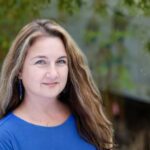
Essential links / resources mentioned in the show:
Rainwater Charitable Foundation


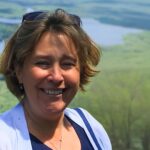
 Professor Louise Serpell